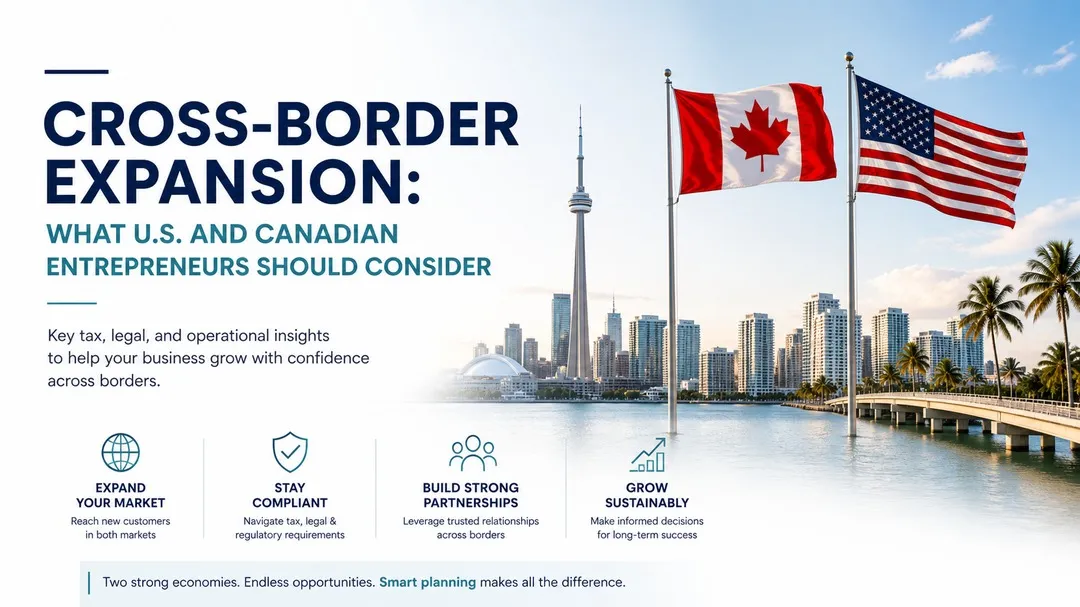
A Practical Guide for Businesses Growing Between Canada and the United States
Imagine Luis, an entrepreneur based in Miami, whose e-commerce business has gained traction among Canadian customers. At the same time, Sofia, a consultant in Toronto, begins receiving inquiries from clients in Florida. Both see growth opportunities beyond their borders—but quickly realize that expanding internationally involves more than sales and logistics.
Cross-border expansion between Canada and the United States is one of the most powerful ways to scale a business. However, it also introduces regulatory, tax, and operational considerations that require careful planning.
Expanding Across Borders: Opportunity Meets Complexity
For entrepreneurs operating between markets like Miami and Toronto, success depends not only on strategy but also on compliance, structure, and cultural awareness.
Why Cross-Border Planning Matters Early
Canada–U.S. Expansion: The Most Common Scenarios
Many businesses begin selling internationally before fully understanding their reporting obligations. While early revenue growth is exciting, it can also trigger:
Planning early allows entrepreneurs to expand with confidence rather than reacting to compliance risks later.
Digital and Remote Businesses Operating in Both Countries
Proper cross-border structuring can unlock:
Cross-border activity typically falls into one of these categories:
Structuring for Cross-Border Growth
This increasingly common model includes:
Even without physical offices, businesses may still trigger reporting obligations.
Operating Through a Foreign Entity
Choosing the right structure is one of the most important decisions entrepreneurs make when expanding internationally.
Similarly, a U.S. company entering Canada may:
Understanding Permanent Establishment Risk
Each option carries different tax and liability implications.
One of the most critical cross-border concepts is permanent establishment (PE).
Tax Considerations for Cross-Border Entrepreneurs
When a PE exists, tax obligations may arise in that jurisdiction.
Understanding PE risk early prevents unexpected liabilities.