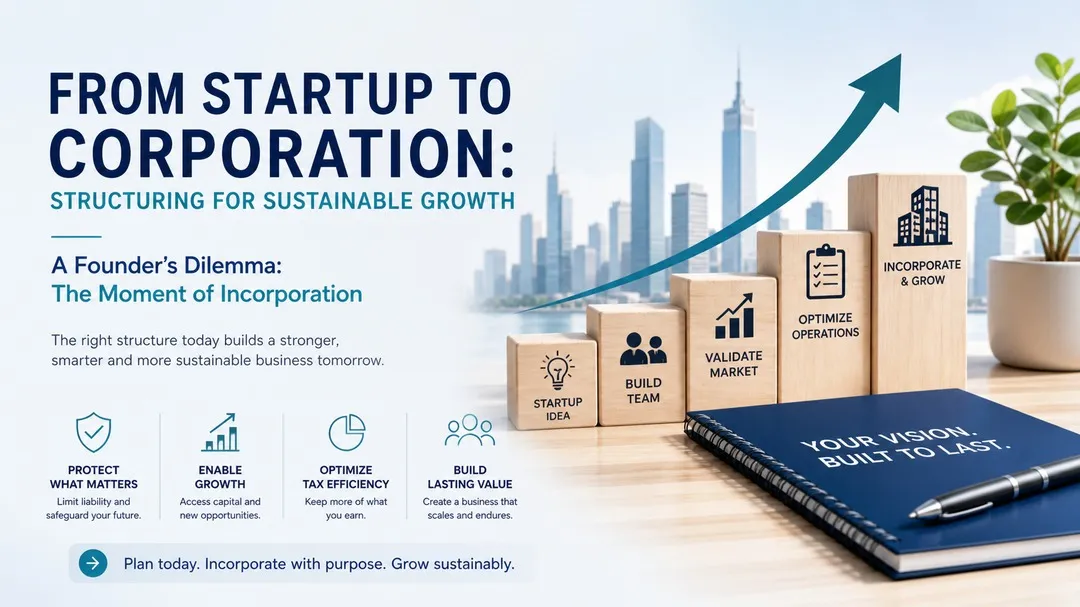
A Practical Guide for Founders Preparing for the Next Stage
Imagine Ana, a driven founder in Toronto who started her business as a side project. What began as a small operation has grown into a steady stream of clients, increasing revenue, and new opportunities. Suppliers are asking for formal contracts. Investors are requesting financial statements. Growth is exciting—but it also brings new responsibilities.
Ana now faces a critical decision:Should she continue operating as a small startup, or incorporate and formalize her business structure?
A Founder’s Dilemma: When Growth Demands Structure
This moment is more than administrative—it’s strategic. The decision to incorporate can shape how a business grows, protects its assets, and positions itself for long-term success.
Incorporation is not simply about filing paperwork—it’s about aligning your structure with your growth stage.
Why Timing Matters More Than Most Founders Realize
Incorporating too early may lead to:
Waiting too long, however, may expose founders to:
Risks and Opportunities: Understanding Both Sides
The right timing creates leverage, unlocking benefits such as:
For many founders, incorporation marks the transition from operating a business to building an enterprise.
Potential Risks
Like any major business decision, incorporation carries both responsibilities and advantages.
Founders should prepare for:
Strategic Opportunities
These obligations are manageable—but they require planning and structure.
When properly planned, incorporation enables:
Step-by-Step Roadmap to Incorporation
Incorporation transforms a business from informal operations into a structured entity ready for growth.
Founders benefit most when incorporation follows a structured process rather than a reactive one.
Advisory Insights: Common Mistakes Founders Should Avoid
Not every business needs the same structure. The choice depends on risk tolerance, growth plans, and funding expectations.
Common structures in Canada include: